Payment tokenization is a data security process that replaces sensitive payment information, such as credit card numbers, with a unique identifier or "token." This token can be used in place of actual data during transactions but has no exploitable value if breached, thereby reducing the risk of data theft and fraud. == Overview == Payment tokenization is generally categorized into two types: security tokens and payment tokens. Security tokens, also known as post-authorization tokens, are used to replace sensitive information like Primary Account Numbers (PANs), such as credit card numbers either after a payment is authorized or for storing data securely (data-at-rest), such as in merchant databases. These models have been in use since the mid-2000s, following the introduction of the Payment Card Industry Data Security Standard in 2004, which established standards for safeguarding cardholder data. The Payment Card Industry Security Standards Council's 2011 Tokenization Guidelines and the proposed American National Standards Institute X9 standards emphasize using tokens primarily to secure sensitive information, not as replacements for payment credentials processed over financial networks. Traditionally, merchants stored PANs to support backend operations such as settlements, reconciliations, chargebacks, loyalty programs, and customer service. However, with the adoption of security tokenization, merchants can substitute PANs with tokens in their systems. This not only reduces their exposure to fraud but also helps minimize the scope and cost of PCI-DSS compliance, offering a more secure and efficient way to manage cardholder data. == Applications == Payment tokenization is widely used by mobile wallets such as Apple Pay, Google Pay, and Samsung Pay use tokenization to safely store card data on devices. E-commerce platforms rely on it to securely retain customer payment details for recurring purchases. At the physical point of sale, EMV-enabled systems use tokenization to protect card information during in-store transactions. Also, subscription billing services implement tokenization to manage and safeguard payment credentials for ongoing charges.
Educational robotics
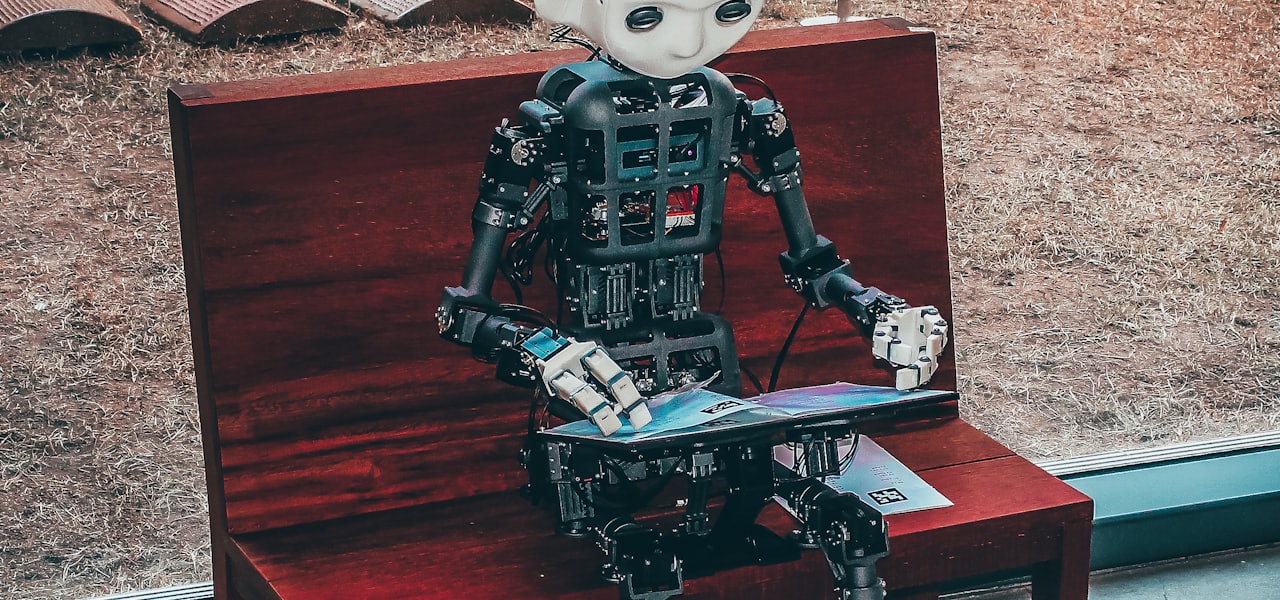
Educational robotics teaches the design, analysis, application and operation of robots. Robots include articulated robots, mobile robots or autonomous vehicles. Educational robotics can be taught from elementary school to graduate programs. Robotics may also be used to motivate and facilitate the instruction other, often foundational, topics such as computer programming, artificial intelligence or engineering design. == Education and training == Robotics engineers design robots, maintain them, develop new applications for them, and conduct research to expand the potential of robotics. Robots have become a popular educational tool in some middle and high schools, as well as in numerous youth summer camps, raising interest in programming, artificial intelligence and robotics among students. First-year computer science courses at several universities now include programming of a robot in addition to traditional software engineering-based coursework. == Category of Educational robotics == The categories of educational robots seen as having more than one category. It can be alienated into different categories based on their physical design and coding method. Generally they are categorised as arm robots, wheeled mobile robots and humanoid robots. Tangibly, coded robots uses a physical means of coding instead of the screens coding. === Initiatives in schools === Leachim, was a robot teacher programmed with the class curricular, as well as certain biographical information on the 40 students whom it was programmed to teach. Leachim could synthesize human speech using Diphone synthesis. It was invented by Michael J. Freeman in 1974 and was tested in a fourth grade classroom in the Bronx, New York. === Post-secondary degree programs === From approximately 1960 through 2005, robotics education at post-secondary institutions took place through elective courses, thesis experiences and design projects offered as part of degree programs in traditional academic disciplines, such as mechanical engineering, electrical engineering, industrial engineering or computer science. Since 2005, more universities have begun granting degrees in robotics as a discipline in its own right, often under the name "Robotic Engineering". Based on a 2015 web-based survey of robotics educators, the degree programs and their estimates annual graduates are listed alphabetically below. Note that only official degree programs where the word "robotics" appears on the transcript or diploma are listed here; whereas degree programs in traditional disciplines with course concentrations or thesis topics related to robotics are deliberately omitted. === Certification === The Robotics Certification Standards Alliance (RCSA) is an international robotics certification authority that confers various industry- and educational-related robotics certifications. === Summer robotics camp === Several summer camp programs include robotics as part of their core curriculum. In addition, youth summer robotics programs are frequently offered by celebrated museums such as the American Museum of Natural History and The Tech Museum of Innovation in Silicon Valley, CA, just to name a few. There are of benefits that come from attending robotics camps. It teaches students how to use teamwork, resilience and motivation, and decision-making. Students learn teamwork because most camps involve exciting activities requiring teamwork. Resilience and motivation is expected because by completing the challenging programs, students feel talented and accomplished after they complete the program. Also students are given unique situations making them make decisions to further their situation. === Educational robotics in special education === Educational robotics can be a useful tool in early and special education. According to a journal on new perspectives in science education, educational robotics can help to develop abilities that promote autonomy and assist their integration into society. Social and personal skills can also be developed through educational robotics. Using Lego Mindstorms NXT, schoolteachers were able to work with middle school aged children in order to develop programs and improve the children's social and personal skills. Additionally, problem solving skills and creativity were utilized through the creation of artwork and scenery to house the robots. Other studies show the benefits of educational robotics in special education as promoting superior cognitive functions, including executive functions. This can lead to an increased ability in "problem solving, reasoning and planning in typically developing preschool children." Through eight weeks of weekly forty-five-minute group sessions using the Bee-Bot, an increase in interest, attention, and interaction between both peers and adults was found in the school and preschool-aged children with Down Syndrome. This study suggests that educational robotics in the classroom can also lead to an improvement in visuo-spatial memory and mental planning. Furthermore, executive functions seemed to be possible in one child during this study.
Data augmentation
Data augmentation is a statistical technique which allows maximum likelihood estimation from incomplete data. Data augmentation has important applications in Bayesian analysis, and the technique is widely used in machine learning to reduce overfitting when training machine learning models, achieved by training models on several slightly-modified copies of existing data. == Synthetic oversampling techniques for traditional machine learning == Synthetic Minority Over-sampling Technique (SMOTE) is a method used to address imbalanced datasets in machine learning. In such datasets, the number of samples in different classes varies significantly, leading to biased model performance. For example, in a medical diagnosis dataset with 90 samples representing healthy individuals and only 10 samples representing individuals with a particular disease, traditional algorithms may struggle to accurately classify the minority class. SMOTE rebalances the dataset by generating synthetic samples for the minority class. For instance, if there are 100 samples in the majority class and 10 in the minority class, SMOTE can create synthetic samples by randomly selecting a minority class sample and its nearest neighbors, then generating new samples along the line segments joining these neighbors. This process helps increase the representation of the minority class, improving model performance. == Data augmentation for image classification == When convolutional neural networks grew larger in mid-1990s, there was a lack of data to use, especially considering that some part of the overall dataset should be spared for later testing. It was proposed to perturb existing data with affine transformations to create new examples with the same labels, which were complemented by so-called elastic distortions in 2003, and the technique was widely used as of 2010s. Data augmentation can enhance CNN performance and acts as a countermeasure against CNN profiling attacks. Data augmentation has become fundamental in image classification, enriching training dataset diversity to improve model generalization and performance. The evolution of this practice has introduced a broad spectrum of techniques, including geometric transformations, color space adjustments, and noise injection. === Geometric Transformations === Geometric transformations alter the spatial properties of images to simulate different perspectives, orientations, and scales. Common techniques include: Affine Transformation Rotation: Rotating images by a specified degree to help models recognize objects at various angles. Reflection: Reflecting images horizontally or vertically to introduce variability in orientation. Translation: Shifting images in different directions to teach models positional invariance. Scaling Shear Mapping Cropping: Removing sections of the image to focus on particular features or simulate closer views. Elastic Distortion Morphing within the same class: Generating new samples by applying morphing techniques between two images belonging to the same class, thereby increasing intra-class diversity. === Color Space Transformations === Color space transformations modify the color properties of images, addressing variations in lighting, color saturation, and contrast. Techniques include: Brightness Adjustment: Varying the image's brightness to simulate different lighting conditions. Contrast Adjustment: Changing the contrast to help models recognize objects under various clarity levels. Saturation Adjustment: Altering saturation to prepare models for images with diverse color intensities. Color Jittering: Randomly adjusting brightness, contrast, saturation, and hue to introduce color variability. === Noise Injection === Injecting noise into images simulates real-world imperfections, teaching models to ignore irrelevant variations. Techniques involve: Gaussian Noise: Adding Gaussian noise mimics sensor noise or graininess. Salt and Pepper Noise: Introducing black or white pixels at random simulates sensor dust or dead pixels. == Data augmentation for signal processing == Residual or block bootstrap can be used for time series augmentation. === Biological signals === Synthetic data augmentation is of paramount importance for machine learning classification, particularly for biological data, which tend to be high dimensional and scarce. The applications of robotic control and augmentation in disabled and able-bodied subjects still rely mainly on subject-specific analyses. Data scarcity is notable in signal processing problems such as for Parkinson's Disease Electromyography signals, which are difficult to source - Zanini, et al. noted that it is possible to use a generative adversarial network (in particular, a DCGAN) to perform style transfer in order to generate synthetic electromyographic signals that corresponded to those exhibited by sufferers of Parkinson's Disease. The approaches are also important in electroencephalography (brainwaves). Wang, et al. explored the idea of using deep convolutional neural networks for EEG-Based Emotion Recognition, results show that emotion recognition was improved when data augmentation was used. A common approach is to generate synthetic signals by re-arranging components of real data. Lotte proposed a method of "Artificial Trial Generation Based on Analogy" where three data examples x 1 , x 2 , x 3 {\displaystyle x_{1},x_{2},x_{3}} provide examples and an artificial x s y n t h e t i c {\displaystyle x_{synthetic}} is formed which is to x 3 {\displaystyle x_{3}} what x 2 {\displaystyle x_{2}} is to x 1 {\displaystyle x_{1}} . A transformation is applied to x 1 {\displaystyle x_{1}} to make it more similar to x 2 {\displaystyle x_{2}} , the same transformation is then applied to x 3 {\displaystyle x_{3}} which generates x s y n t h e t i c {\displaystyle x_{synthetic}} . This approach was shown to improve performance of a Linear Discriminant Analysis classifier on three different datasets. Current research shows great impact can be derived from relatively simple techniques. For example, Freer observed that introducing noise into gathered data to form additional data points improved the learning ability of several models which otherwise performed relatively poorly. Tsinganos et al. studied the approaches of magnitude warping, wavelet decomposition, and synthetic surface EMG models (generative approaches) for hand gesture recognition, finding classification performance increases of up to +16% when augmented data was introduced during training. More recently, data augmentation studies have begun to focus on the field of deep learning, more specifically on the ability of generative models to create artificial data which is then introduced during the classification model training process. In 2018, Luo et al. observed that useful EEG signal data could be generated by Conditional Wasserstein Generative Adversarial Networks (GANs) which was then introduced to the training set in a classical train-test learning framework. The authors found classification performance was improved when such techniques were introduced. === Mechanical signals === The prediction of mechanical signals based on data augmentation brings a new generation of technological innovations, such as new energy dispatch, 5G communication field, and robotics control engineering. In 2022, Yang et al. integrate constraints, optimization and control into a deep network framework based on data augmentation and data pruning with spatio-temporal data correlation, and improve the interpretability, safety and controllability of deep learning in real industrial projects through explicit mathematical programming equations and analytical solutions.
Mountain car problem
Mountain Car, a standard testing domain in Reinforcement learning, is a problem in which an under-powered car must drive up a steep hill. Since gravity is stronger than the car's engine, even at full throttle, the car cannot simply accelerate up the steep slope. The car is situated in a valley and must learn to leverage potential energy by driving up the opposite hill before the car is able to make it to the goal at the top of the rightmost hill. The domain has been used as a test bed in various reinforcement learning papers. == Introduction == The mountain car problem, although fairly simple, is commonly applied because it requires a reinforcement learning agent to learn on two continuous variables: position and velocity. For any given state (position and velocity) of the car, the agent is given the possibility of driving left, driving right, or not using the engine at all. In the standard version of the problem, the agent receives a negative reward at every time step when the goal is not reached; the agent has no information about the goal until an initial success. == History == The mountain car problem appeared first in Andrew Moore's PhD thesis (1990). It was later more strictly defined in Singh and Sutton's reinforcement learning paper with eligibility traces. The problem became more widely studied when Sutton and Barto added it to their book Reinforcement Learning: An Introduction (1998). Throughout the years many versions of the problem have been used, such as those which modify the reward function, termination condition, and the start state. == Techniques used to solve mountain car == Q-learning and similar techniques for mapping discrete states to discrete actions need to be extended to be able to deal with the continuous state space of the problem. Approaches often fall into one of two categories, state space discretization or function approximation. === Discretization === In this approach, two continuous state variables are pushed into discrete states by bucketing each continuous variable into multiple discrete states. This approach works with properly tuned parameters but a disadvantage is information gathered from one state is not used to evaluate another state. Tile coding can be used to improve discretization and involves continuous variables mapping into sets of buckets offset from one another. Each step of training has a wider impact on the value function approximation because when the offset grids are summed, the information is diffused. === Function approximation === Function approximation is another way to solve the mountain car. By choosing a set of basis functions beforehand, or by generating them as the car drives, the agent can approximate the value function at each state. Unlike the step-wise version of the value function created with discretization, function approximation can more cleanly estimate the true smooth function of the mountain car domain. === Eligibility traces === One aspect of the problem involves the delay of actual reward. The agent is not able to learn about the goal until a successful completion. Given a naive approach for each trial the car can only backup the reward of the goal slightly. This is a problem for naive discretization because each discrete state will only be backed up once, taking a larger number of episodes to learn the problem. This problem can be alleviated via the mechanism of eligibility traces, which will automatically backup the reward given to states before, dramatically increasing the speed of learning. Eligibility traces can be viewed as a bridge from temporal difference learning methods to Monte Carlo methods. == Technical details == The mountain car problem has undergone many iterations. This section focuses on the standard well-defined version from Sutton (2008). === State variables === Two-dimensional continuous state space. V e l o c i t y = ( − 0.07 , 0.07 ) {\displaystyle Velocity=(-0.07,0.07)} P o s i t i o n = ( − 1.2 , 0.6 ) {\displaystyle Position=(-1.2,0.6)} === Actions === One-dimensional discrete action space. m o t o r = ( l e f t , n e u t r a l , r i g h t ) {\displaystyle motor=(left,neutral,right)} === Reward === For every time step: r e w a r d = − 1 {\displaystyle reward=-1} === Update function === For every time step: A c t i o n = [ − 1 , 0 , 1 ] {\displaystyle Action=[-1,0,1]} V e l o c i t y = V e l o c i t y + ( A c t i o n ) ∗ 0.001 + cos ( 3 ∗ P o s i t i o n ) ∗ ( − 0.0025 ) {\displaystyle Velocity=Velocity+(Action)0.001+\cos(3Position)(-0.0025)} P o s i t i o n = P o s i t i o n + V e l o c i t y {\displaystyle Position=Position+Velocity} === Starting condition === Optionally, many implementations include randomness in both parameters to show better generalized learning. P o s i t i o n = − 0.5 {\displaystyle Position=-0.5} V e l o c i t y = 0.0 {\displaystyle Velocity=0.0} === Termination condition === End the simulation when: P o s i t i o n ≥ 0.6 {\displaystyle Position\geq 0.6} == Variations == There are many versions of the mountain car which deviate in different ways from the standard model. Variables that vary include but are not limited to changing the constants (gravity and steepness) of the problem so specific tuning for specific policies become irrelevant and altering the reward function to affect the agent's ability to learn in a different manner. An example is changing the reward to be equal to the distance from the goal, or changing the reward to zero everywhere and one at the goal. Additionally, a 3D mountain car can be used, with a 4D continuous state space.
Hyperparameter (machine learning)
In machine learning, a hyperparameter is a parameter that can be set in order to define any configurable part of a model's learning process. Hyperparameters can be classified as either model hyperparameters (such as the topology and size of a neural network) or algorithm hyperparameters (such as the learning rate and the batch size of an optimizer). These are named hyperparameters in contrast to parameters, which are characteristics that the model learns from the data. Hyperparameters are not required by every model or algorithm. Some simple algorithms such as ordinary least squares regression require none. However, the LASSO algorithm, for example, adds a regularization hyperparameter to ordinary least squares which must be set before training. Even models and algorithms without a strict requirement to define hyperparameters may not produce meaningful results if these are not carefully chosen. However, optimal values for hyperparameters are not always easy to predict. Some hyperparameters may have no meaningful effect, or one important variable may be conditional upon the value of another. Often a separate process of hyperparameter tuning is needed to find a suitable combination for the data and task. As well as improving model performance, hyperparameters can be used by researchers to introduce robustness and reproducibility into their work, especially if it uses models that incorporate random number generation. == Considerations == The time required to train and test a model can depend upon the choice of its hyperparameters. A hyperparameter is usually of continuous or integer type, leading to mixed-type optimization problems. The existence of some hyperparameters is conditional upon the value of others, e.g. the size of each hidden layer in a neural network can be conditional upon the number of layers. === Difficulty-learnable parameters === The objective function is typically non-differentiable with respect to hyperparameters. As a result, in most instances, hyperparameters cannot be learned using gradient-based optimization methods (such as gradient descent), which are commonly employed to learn model parameters. These hyperparameters are those parameters describing a model representation that cannot be learned by common optimization methods, but nonetheless affect the loss function. An example would be the tolerance hyperparameter for errors in support vector machines. === Untrainable parameters === Sometimes, hyperparameters cannot be learned from the training data because they aggressively increase the capacity of a model and can push the loss function to an undesired minimum (overfitting to the data), as opposed to correctly mapping the richness of the structure in the data. For example, if we treat the degree of a polynomial equation fitting a regression model as a trainable parameter, the degree would increase until the model perfectly fit the data, yielding low training error, but poor generalization performance. === Tunability === Most performance variation can be attributed to just a few hyperparameters. The tunability of an algorithm, hyperparameter, or interacting hyperparameters is a measure of how much performance can be gained by tuning it. For an LSTM, while the learning rate followed by the network size are its most crucial hyperparameters, batching and momentum have no significant effect on its performance. Although some research has advocated the use of mini-batch sizes in the thousands, other work has found the best performance with mini-batch sizes between 2 and 32. === Robustness === An inherent stochasticity in learning directly implies that the empirical hyperparameter performance is not necessarily its true performance. Methods that are not robust to simple changes in hyperparameters, random seeds, or even different implementations of the same algorithm cannot be integrated into mission critical control systems without significant simplification and robustification. Reinforcement learning algorithms, in particular, require measuring their performance over a large number of random seeds, and also measuring their sensitivity to choices of hyperparameters. Their evaluation with a small number of random seeds does not capture performance adequately due to high variance. Some reinforcement learning methods, e.g. DDPG (Deep Deterministic Policy Gradient), are more sensitive to hyperparameter choices than others. == Optimization == Hyperparameter optimization finds a tuple of hyperparameters that yields an optimal model which minimizes a predefined loss function on given test data. The objective function takes a tuple of hyperparameters and returns the associated loss. Typically these methods are not gradient based, and instead apply concepts from derivative-free optimization or black box optimization. == Reproducibility == Apart from tuning hyperparameters, machine learning involves storing and organizing the parameters and results, and making sure they are reproducible. In the absence of a robust infrastructure for this purpose, research code often evolves quickly and compromises essential aspects like bookkeeping and reproducibility. Online collaboration platforms for machine learning go further by allowing scientists to automatically share, organize and discuss experiments, data, and algorithms. Reproducibility can be particularly difficult for deep learning models. For example, research has shown that deep learning models depend very heavily even on the random seed selection of the random number generator.
Microsoft Support Diagnostic Tool
The Microsoft Support Diagnostic Tool (MSDT) is a legacy service in Microsoft Windows that allows Microsoft technical support agents to analyze diagnostic data remotely for troubleshooting purposes. In April 2022 it was observed to have a security vulnerability that allowed remote code execution which was being exploited to attack computers in Russia and Belarus, and later against the Tibetan government in exile. Microsoft advised a temporary workaround of disabling the MSDT by editing the Windows registry. == Use == When contacting support the user is told to run MSDT and given a unique "passkey" which they enter. They are also given an "incident number" to uniquely identify their case. The MSDT can also be run offline which will generate a .CAB file which can be uploaded from a computer with an internet connection. == Security vulnerabilities == === Follina === Follina is the name given to a remote code execution (RCE) vulnerability, a type of arbitrary code execution (ACE) exploit, in the Microsoft Support Diagnostic Tool (MSDT) which was first widely publicized on May 27, 2022, by a security research group called Nao Sec. This exploit allows a remote attacker to use a Microsoft Office document template to execute code via MSDT. This works by exploiting the ability of Microsoft Office document templates to download additional content from a remote server. If the size of the downloaded content is large enough it causes a buffer overflow allowing a payload of Powershell code to be executed without explicit notification to the user. On May 30 Microsoft issued CVE-2022-30190 with guidance that users should disable MSDT. Malicious actors have been observed exploiting the bug to attack computers in Russia and Belarus since April, and it is believed Chinese state actors had been exploiting it to attack the Tibetan government in exile based in India. Microsoft patched this vulnerability in its June 2022 patches. === DogWalk === The DogWalk vulnerability is a remote code execution (RCE) vulnerability in the Microsoft Support Diagnostic Tool (MSDT). It was first reported in January 2020, but Microsoft initially did not consider it to be a security issue. However, the vulnerability was later exploited in the wild, and Microsoft released a patch for it in August 2022. The vulnerability is caused by a path traversal vulnerability in the sdiageng.dll library. This vulnerability allows an attacker to trick a victim into opening a malicious diagcab file, which is a type of Windows cabinet file that is used to store support files. When the diagcab file is opened, it triggers the MSDT tool, which then executes the malicious code. Originally discovered by Mitja Kolsek, the DogWalk vulnerability is caused by a path traversal vulnerability in the sdiageng.dll library. This vulnerability allows an attacker to trick a victim into opening a malicious diagcab file, which is a type of Windows cabinet file that is used to store support files. When the diagcab file is opened, it triggers the MSDT tool, which then executes the malicious code. The vulnerability is exploited by creating a malicious diagcab file that contains a specially crafted path. This path contains a sequence of characters that is designed to exploit the path traversal vulnerability in the sdiageng.dll library. When the diagcab file is opened, the MSDT tool will attempt to follow the path. However, the path will contain characters that are not valid for a Windows path. This will cause the MSDT tool to crash. When the MSDT tool crashes, it will generate a memory dump. This memory dump will contain the malicious code that was executed by the MSDT tool. The attacker can then use this memory dump to extract the malicious code and execute it on their own computer. == Retirement == Microsoft will no longer be supporting the Windows legacy inbox Troubleshooters. In 2025, Microsoft will remove the MSDT platform entirely. Get Help is the replacement tool. == Windows versions == Windows 7 Windows 8.1 Windows 10 Windows 11 (up to 22H2) Future versions and feature upgrades will deprecate the MSDT after May 23, 2023.
Confusion matrix
In machine learning, a confusion matrix, also known as error matrix, is a specific table layout that allows visualization of the performance of an algorithm, typically a supervised learning one. In unsupervised learning it is usually called a matching matrix. The term is used specifically in the problem of statistical classification. Each row of the matrix represents the instances in an actual class while each column represents the instances in a predicted class, or vice versa – both variants are found in the literature. The diagonal of the matrix therefore represents all instances that are correctly predicted. The name stems from the fact that it makes it easy to identify whether the system is confusing two classes (i.e., commonly mislabeling one class as another). The confusion matrix has its origins in human perceptual studies of auditory stimuli. It was adapted for machine learning studies and used by Frank Rosenblatt, among other early researchers, to compare human and machine classifications of visual (and later auditory) stimuli. It is a special kind of contingency table, with two dimensions ("actual" and "predicted"), and identical sets of "classes" in both dimensions (each combination of dimension and class is a variable in the contingency table). == Example == Given a sample of 12 individuals, 8 that have been diagnosed with cancer and 4 that are cancer-free, where individuals with cancer belong to class 1 (positive) and non-cancer individuals belong to class 0 (negative), we can display that data as follows: Assume that we have a classifier that distinguishes between individuals with and without cancer in some way, we can take the 12 individuals and run them through the classifier. The classifier then makes 9 accurate predictions and misses 3: 2 individuals with cancer wrongly predicted as being cancer-free (sample 1 and 2), and 1 person without cancer that is wrongly predicted to have cancer (sample 9). Notice, that if we compare the actual classification set to the predicted classification set, there are 4 different outcomes that could result in any particular column: The actual classification is positive and the predicted classification is positive (1,1). This is called a true positive result because the positive sample was correctly identified by the classifier. The actual classification is positive and the predicted classification is negative (1,0). This is called a false negative result because the positive sample is incorrectly identified by the classifier as being negative. The actual classification is negative and the predicted classification is positive (0,1). This is called a false positive result because the negative sample is incorrectly identified by the classifier as being positive. The actual classification is negative and the predicted classification is negative (0,0). This is called a true negative result because the negative sample gets correctly identified by the classifier. We can then perform the comparison between actual and predicted classifications and add this information to the table, making correct results appear in green so they are more easily identifiable. The template for any binary confusion matrix uses the four kinds of results discussed above (true positives, false negatives, false positives, and true negatives) along with the positive and negative classifications. The four outcomes can be formulated in a 2×2 confusion matrix, as follows: The color convention of the three data tables above were picked to match this confusion matrix, in order to easily differentiate the data. Now, we can simply total up each type of result, substitute into the template, and create a confusion matrix that will concisely summarize the results of testing the classifier: In this confusion matrix, of the 8 samples with cancer, the system judged that 2 were cancer-free, and of the 4 samples without cancer, it predicted that 1 did have cancer. All correct predictions are located in the diagonal of the table (highlighted in green), so it is easy to visually inspect the table for prediction errors, as values outside the diagonal will represent them. By summing up the 2 rows of the confusion matrix, one can also deduce the total number of positive (P) and negative (N) samples in the original dataset, i.e. P = T P + F N {\displaystyle P=TP+FN} and N = F P + T N {\displaystyle N=FP+TN} . == Table of confusion == In predictive analytics, a table of confusion (sometimes also called a confusion matrix) is a table with two rows and two columns that reports the number of true positives, false negatives, false positives, and true negatives. This allows more detailed analysis than simply observing the proportion of correct classifications (accuracy). Accuracy will yield misleading results if the data set is unbalanced; that is, when the numbers of observations in different classes vary greatly. For example, if there were 95 cancer samples and only 5 non-cancer samples in the data, a particular classifier might classify all the observations as having cancer. The overall accuracy would be 95%, but in more detail the classifier would have a 100% recognition rate (sensitivity) for the cancer class but a 0% recognition rate for the non-cancer class. F1 score is even more unreliable in such cases, and here would yield over 97.4%, whereas informedness removes such bias and yields 0 as the probability of an informed decision for any form of guessing (here always guessing cancer). According to Davide Chicco and Giuseppe Jurman, the most informative metric to evaluate a confusion matrix is the Matthews correlation coefficient (MCC). Other metrics can be included in a confusion matrix, each of them having their significance and use. Some researchers have argued that the confusion matrix, and the metrics derived from it, do not truly reflect a model's knowledge. In particular, the confusion matrix cannot show whether correct predictions were reached through sound reasoning or merely by chance (a problem known in philosophy as epistemic luck). It also does not capture situations where the facts used to make a prediction later change or turn out to be wrong (defeasibility). This means that while the confusion matrix is a useful tool for measuring classification performance, it may give an incomplete picture of a model’s true reliability. == Confusion matrices with more than two categories == Confusion matrix is not limited to binary classification and can be used in multi-class classifiers as well. The confusion matrices discussed above have only two conditions: positive and negative. For example, the table below summarizes communication of a whistled language between two speakers, with zero values omitted for clarity. == Confusion matrices in multi-label and soft-label classification == Confusion matrices are not limited to single-label classification (where only one class is present) or hard-label settings (where classes are either fully present, 1, or absent, 0). They can also be extended to Multi-label classification (where multiple classes can be predicted at once) and soft-label classification (where classes can be partially present). One such extension is the Transport-based Confusion Matrix (TCM), which builds on the theory of optimal transport and the principle of maximum entropy. TCM applies to single-label, multi-label, and soft-label settings. It retains the familiar structure of the standard confusion matrix: a square matrix sized by the number of classes, with diagonal entries indicating correct predictions and off-diagonal entries indicating confusion. In the single-label case, TCM is identical to the standard confusion matrix. TCM follows the same reasoning as the standard confusion matrix: if class A is overestimated (its predicted value is greater than its label value) and class B is underestimated (its predicted value is less than its label value), A is considered confused with B, and the entry (B, A) is increased. If a class is both predicted and present, it is correctly identified, and the diagonal entry (A, A) increases. Optimal transport and maximum entropy are used to determine the extent to which these entries are updated. TCM enables clearer comparison between predictions and labels in complex classification tasks, while maintaining a consistent matrix format across settings.