The artificial intelligence industry in Italy is growing and supports industrial development. In 2024 it reached a new record, reaching 1.2 billion euros with a growth of +58% compared to 2023. While in 2025, the growth of artificial intelligence in the industrial application was even greater than in 2024 both in terms of value and application to industrial sectors. == History == The roots of AI research in Italy extend back to the 1970s, when Italian scholars began exploring automated reasoning, programming language semantics, and pattern recognition. Researchers such as those involved in early projects at the National Research Council and various universities laid the groundwork for subsequent academic and industrial developments in the field. During this period, the focus was predominantly on developing algorithms for automated theorem proving and building systems to reason about complex mathematical problems. This era witnessed the birth of methodologies that would later influence numerous AI subfields, from natural language processing (NLP) to robotics. === Institutional milestones and academic contributions === A turning point in the Italian AI landscape was the formation of the Italian Association for Artificial Intelligence (AIxIA) in 1988. Founded by academics, including Luigia Carlucci Aiello, the association established a platform for collaboration between universities, research centers, and industry. Led by Aiello, AIIA played a role in promoting research, organizing national conferences, and fostering international partnerships that connected Italy's AI community to global networks. At the same time, professors such as Roberto Navigli and numerous practitioners contributed to the advancement of AI in Italy. Navigli has worked in multilingual NLP, including the creation of BabelNet, and led the Minerva project. === Industrial AI === Over recent decades, numerous national and European initiatives supported by funding from programs such as the National Recovery and Resilience Plan (PNRR) have spurred the transition from theoretical research to practical applications. Industrial sectors including manufacturing, banking, and healthcare increasingly embraced AI-driven automation, while research institutions collaborated with industrial partners to deploy cutting-edge solutions. In recent years, Italy has also seen the establishment of specialized research centers and institutes aimed at bridging the gap between academic innovation and industrial application. These initiatives indicate a broader national commitment to integrating AI into the fabric of Italian industry. == Recent developments == === Emergence of generative AI === A landmark in Italy's modern AI evolution is the development of Minerva AI. Developed by the Sapienza NLP research group at Sapienza University of Rome and led by Professor Roberto Navigli, Minerva represents the first family of large language models (LLMs) trained from scratch with a primary focus on the Italian language. ==== Minerva 7B ==== The latest iteration, Minerva 7B, has 7 billion parameters and has been trained on an extensive corpus of over 1.5 trillion words. By using advanced instruction tuning techniques, Minerva 7B is able to produce highly accurate, coherent, and contextually sensitive responses addressing common issues such as hallucinations and inappropriate content generation. This breakthrough sets a benchmark for transparent, open-source AI development in the country. Minerva's development, carried out within the FAIR (Future Artificial Intelligence Research) project in collaboration with CINECA and supported by supercomputing resources like the Leonardo (supercomputer), aligns closely with Italy's cultural and linguistic heritage. === Establishment of AI4I === The recent establishment of the Istituto Italiano per l’Intelligenza Artificiale (AI4I) is part of Italy's strategy to improve its industrial competitiveness in AI. This dedicated institute aims to bridge the gap between research institutions and industrial enterprises; promote training and R&D support to nurture the next generation of Italian AI experts; and enhance national competitiveness. This initiative is expected to serve as a hub for applied AI research, driving innovations that are tailored to the specific needs of Italian industry and public administration. === Benefits of InvestAI === Italy's AI industry stands to benefit from the European InvestAI initiative, a plan unveiled at the recent AI Action Summit in Paris. InvestAI is an effort by the European Commission to mobilize €200 billion for AI investments, with a dedicated €20 billion fund earmarked for building AI gigafactories. These gigafactories are planned as large-scale hubs for training advanced, complex AI models using approximately 100,000 last-generation AI chips. For Italy, this investment presents several major opportunities: Access to State-of-the-Art Infrastructure: Italian companies, research institutions, and start-ups can leverage the gigafactories’ immense computational resources, enabling them to train highly sophisticated language models and other AI systems. Enhanced Competitiveness and Collaboration: With InvestAI's layered funding model where EU funds help de-risk private investments Italian firms can access capital more readily. This will bolster public–private partnerships and create a more dynamic AI ecosystem that spans from academic research to industrial applications. Alignment with National and Regional Initiatives: The Istituto Italiano per l’Intelligenza Artificiale (AI4I), based in Turin, is already recognized as a strategic asset by both Italy and the European Union. As the main recipient of InvestAI funds in Italy, AI4I will play a pivotal role in implementing these investments locally, fostering innovation in sectors like manufacturing, healthcare and aerospace. Commission President Ursula von der Leyen emphasized that InvestAI is designed to democratize AI innovation throughout Europe by ensuring that even smaller companies have access to high-performance computing power. For Italy, this means not only keeping pace with global leaders but also harnessing European-scale investments to transform its AI industry and drive economic growth.
List of software palettes
This is a list of software palettes used by computers. Systems that use a 4-bit or 8-bit pixel depth can display up to 16 or 256 colors simultaneously. Many personal computers in the early 1990s displayed at most 256 different colors, freely selected by software (either by the user or by a program) from their wider hardware's RGB color palette. Usual selections of colors in limited subsets (generally 16 or 256) of the full palette includes some RGB level arrangements commonly used with the 8-bit palettes as master palettes or universal palettes (i.e., palettes for multipurpose uses). These are some representative software palettes, but any selection can be made in such of systems. For specific hardware color palettes, see the list of monochrome and RGB palettes, list of 8-bit computer hardware graphics, the list of 16-bit computer hardware graphics and the list of video game console palettes articles. Each palette is represented by an array of color patches. A one-pixel size version appears below each palette, to make it easy to compare palette sizes. For each unique palette, an image color test chart and sample image (truecolor original follows) rendered with that palette (without dithering) are given. The test chart shows the full 8-bit, 256 levels of the red, green, and blue (RGB) primary colors and cyan, magenta, and yellow complementary colors, along with a full 8-bit, 256 levels grayscale. Gradients of RGB intermediate colors (orange, lime green, sea green, sky blue, violet and fuchsia), and a full hue spectrum are also present. Color charts are not gamma corrected. These elements illustrate the color depth and distribution of the colors of any given palette, and the sample image indicates how the color selection of such palettes could represent real-life images. == System specifics == These are selections of colors officially employed as system palettes in some popular operating systems for personal computers that support 8-bit displays. === Microsoft Windows and IBM OS/2 default 16-color palette === Used by these platforms as a roughly backward compatible palette for the CGA, EGA and VGA text modes, but with colors arranged in a different order. Also, is the default palette for 16 color icons. The corresponding indices into this palette are: === Microsoft Windows default 20-color palette === In 256-color mode, there are four additional standard Windows colors, twenty system reserved colors in total; thus the system leaves 236 palette indexes free for applications to use. The system color entries inside a 256-color palette table are the first ten plus the last ten. In any case, the additional system colors do not seem to add a sharp color richness: they are only some intermediate shades of grayish colors. Since Windows 95, these additional colors can be changed by the system when a color scheme needs custom colors, reducing their utility as static, unchanging palette entries. The complete 20-color Windows system palette is: === Apple Macintosh default 16-color palette === When Apple Computer introduced the Macintosh II in 1987, this 16-color palette was included in System 4.1. === RISC OS default palette === Acorn RISC OS 2.x and 3.x provided this 16-color palette: === Solaris default 16-color palette === Solaris OS used this color palette: == RGB arrangements == These are selections of colors based in evenly ordered RGB levels which provide complete RGB combinations, mainly used as master palettes to display any kind of image within the limitations of the 8-bit pixel depth. === 6 level RGB === Having six levels for every primary, with 6³ = 216 combinations. The index can be addressed by (36×R)+(6×G)+B, with all R, G and B values in a range from 0 to 5. Intended as homogeneous RGB cube, it gives six true grays. Also, there is room for another sorts of 40 colors, so operating systems or programs can add extra colors. Systems that use this software palette are: Web-safe colors Apple Macintosh 256 color default palette. It also contains four gradients of ten shades each for gray, red, green and blue. === 6-7-6 levels RGB === This palette is constructed with six levels for red and blue primaries and seven levels for the green primary, giving 6×7×6 = 252 combinations. The index can be addressed by (42×R)+(6×G)+B, with R and B values in a range from 0 to 5 and G in a range from 0 to 6. The same case as the former, but with an added level of green due to the greater sensibility of the normal human eye to this frequency. It does not provide true grays, but remaining indexes can be filled with four intermediate grays. In any case, there is little room for any other color. === 6-8-5 levels RGB === This palette is constructed with six levels for red, eight levels for green and five levels for the blue primaries, giving 6×8×5 = 240 combinations. The index can be addressed by (40×R)+(5×G)+B, with R ranging from 0 to 5, G from 0 to 7 and B from 0 to 4. Levels are chosen in function of sensibility of the normal human eye to every primary color. Also, it does not provide true grays. Remaining indexes can be filled with sixteen intermediate grays or other fixed colors. In fact, this is the best balanced RGB master software palette, in a compromise between the RGB arrangement based in the human eye's sensibility and a sufficient remaining palette entries for another purposes. === 8-8-4 levels RGB === The 8-8-4 level RGB use eight levels for each of the red and green color components (3+3 high order bits), and four levels (2 low order bits) for the blue component, due to the lesser sensitivity of the normal human eye to this primary color. This results in an 8×8×4 = 256-color palette as follows: This RGB software palette occupies the full 8-bit range of possible palette entries, so there is no room for other fixed colors. Software using this palette must draw their user interface elements with the same colors used to show pictures. Also again, it does not provide true grays. == Other common uses of software palettes == === Grayscale palettes === Simple palette made doing every triplet RGB primaries having equal values as a continuous gradient from black to white through the full available palette entries. Here is the 8-bit, 256 levels palette: Used to display pure grayscale TIFF or JPEG images, for example. === Color gradient palettes === Palettes made of a continuous color gradient from darkest to lightest arbitrary hues. The pixel data is treated as if it were grayscale, but the color table plays with RGB color combinations, not only gray. The relationship between the original luminance and the mapped one can vary, but the lighting scale is preserved along all the palette entries. One very common case of such palettes is the sepia tone palette, which gives an image an old fashioned and aged look (left). Another gradient example, based on blue hues, is presented here (right), but any hue or mixing of hues can be used. Many cell phones with built-in cameras have options to take colorized photos using this technique. === Adaptive palettes === Those whose whole number of available indexes are filled with RGB combinations selected from the statistical order of appearance (usually balanced) of a concrete full true color original image. There exist many algorithms to pick the colors through color quantization; one well known is the Heckbert's median-cut algorithm. Here is the 8-bit, 256 color palette used with the color test chart and the image sample above: Adaptive palettes only work well with a unique image. Trying to display different images with adaptive palettes over an 8-bit display usually results in only one image with correct colors, because the images have different palettes and only one can be displayed at a time. Here is an example of what happens when an indexed color image is displayed with any color palette that is not its own adaptive palette: === False color palettes === Arbitrary gradient color scales, usually 256 shades, with no relationship with real colors of a given image. They are employed to artificially colorize a grayscale image to reveal details and/or to map the pixel level values to amounts of some physical magnitude (potential, temperature, altitude, etc.) Note, in the example above, that new details can be seen as blue over magenta in the background's dark areas of the original photograph. Here is the 8-bit, 256 color gradient palette used with the color test chart and the image sample above: There exist many false color palettes, some of them standardized, used mainly in scientific applications: astronomy and radioastronomy, satellite land imaging, thermography, study of materials, tomography and magnetic resonance imaging in medicine, etc.
Game Jolt
Game Jolt is a social community platform for video games, gamers and content creators. Founded by Yaprak and David DeCarmine, it is available on iOS, Android, and on the web and as a desktop app for Windows and Linux. Users share interactive content through a variety of formats including images, videos, live streams, chat rooms, and virtual events. == Features == === Crowd streaming === In 2021 Game Jolt revealed their own live streaming feature called Firesides. Firesides allowed multiple users to simultaneously livestream together with nearly no delay. The feature launched with a virtual concert showcasing its ability to accommodate multiple streamers. On October 16, 2023, Firesides were removed from Game Jolt. === Mobile app === Game Jolt Social by Game Jolt Inc. launched on both the Apple App Store and Google Play Store in March 2022. "It's clear to us that Gen Z is tired of generic social media and they want a place specifically for gaming that supports all types of content they're creating–art, videos, thoughts, and livestreams all in one place." said Game Jolt founder and CEO Yaprak DeCarmine, in a statement to VentureBeat. === Game API === The Game Jolt Application Programming Interface (usually known as the Game Jolt Game API) allows any developer using a game development platform that supports HTTP operations and MD5 or SHA-1. Game Jolt advertises that the API can: Create multiple "scoreboards" which collect high scores from players made publicly available on the game's profile and give user accounts EXP Award player's trophies which give user accounts EXP Store game data on Game Jolt's data servers Log whether a user is currently playing a game they're logged into via the GJAPI == Game jams and competitions == Game Jolt regularly hosts game jams where participants are encouraged to develop games for a chance to win prizes. They hosted their first game jam in 2009, Shocking Contest. In November 2014, Game Jolt announced the "Indies vs PewDiePie" game jam, partnering with the popular YouTuber Felix "PewDiePie" Kjellberg. Developers were given a weekend (21–24 November) to create a game with the theme of "fun to play, fun to watch" to suit the Let's Plays entertainment style. Users could rate entries afterwards until December 1 when the scores were counted up. The prize to the top 10 rated games was Felix playing the games on his channel as a means of promotion for the developers, although later he played other entries. One of the participants of the jam, now known as Outerminds Inc. was discovered and hired by PewDiePie to develop his mobile game, Legend of the Brofist. Game Jolt partnered with Felix, Sean "Jacksepticeye" McLoughlin and Mark "Markiplier" Fischbach to host "Indies vs Gamers" in July 2015. The requirements for entries were arcade games using the Game Jolt Game API highscore tables, to be made between the July 17–20 and the top 5 games were played on the partner's YouTube channels. Following the "Indies vs PewDiePie" game jam in 2014, Game Jolt released their internal jam hosting tools public for all users to use as a service, to create their own game jams that integrated with the main site. Today, Game Jolt focuses on hosting and co-hosting game competitions with established brands in order to bring monetary and educational opportunities to their users. On April 15, 2024, an announcement was made about a collaboration with Pocket Worlds for the "HighRise Game Jam". Pocket Worlds had sold NFTs up until roughly 2022, causing a community outburst. The situation was addressed, and the situation started to disperse. == Contests == == Events == Game Jolt hosts both physical and virtual events to entertain and prank its users, which consists of the following: == History == Game Jolt has supported independent creators with a central platform to manage their content and communities since its start in 2003. David DeCarmine began development of Game Jolt at the age of 14 for a group of hobbyists, making games and sharing on forums in an early iteration known as Holo World. The original intention was to create a platform for gamers where new games could be discoverable and quickly playable, and where feedback could be provided directly to the creators, allowing them to continue improving their games. In 2008, Game Jolt was registered as an LLC, then incorporated as Game Jolt Inc. in September 2020. A new site launched in 2015 featuring a responsive design, automated curation for both games and game news articles which weighs how recent a game was uploaded and how popular it is ("hot") and filtering options on game listings for platform, maturity rating and development status. In March 2022, Game Jolt launched a mobile application simultaneously on the Google Play Store and Apple App Store targeted at Gen Z gamers and creators. While in beta, the mobile app had 100,000 installs pre-launch. === Game store === Game Jolt continues to host a large library of independent games. Game developers can upload their games directly to the site to share or sell. They would allow distribution for downloadable games, later adding support for Adobe Flash, Unity and Java games which allowed support for browser based games. In February 2013, Game Jolt built support for browser-based HTML5 games as well. A user levelling system was released into public beta in April 2013, incorporating the GJAPI trophies and highscores, as well as site activity, to generate 'EXP' (experience points). Game Jolt Jams released in early 2014 as a service to allow users to create their own game jams that integrated with the main site. In April 2016, an online marketplace was announced and released the following month with an exclusive set of game titles, including Bendy and the Ink Machine, allowing developers to sell their games on the site. In January 2016, Game Jolt released source code of the client and site's front end on GitHub under MIT license. In January 2022, Game Jolt banned adult games from appearing on the site, stating in an email to developers that the site had become a "social media platform" and they "had to make decisions around the direction and future of the brand which has now included the removal of hosted games with explicitly adult content." In response to a tweet by Itch.io saying the site is not for prudes, they wrote in their own tweet: "Game Jolt is a platform with a large audience of 13-16 year olds. Our users asked us to clean up, so here we are." == Investments == After bootstrapping Game Jolt with revenue earned from ads on the website for years, the DeCarmines secured venture capital in 2020 from SoftBank, doing so again in 2021 from founders of Twitch, Rec Room, Modio and more.
Non-local means
Non-local means is an algorithm in image processing for image denoising. Unlike "local mean" filters, which take the mean value of a group of pixels surrounding a target pixel to smooth the image, non-local means filtering takes a mean of all pixels in the image, weighted by how similar these pixels are to the target pixel. This results in much greater post-filtering clarity, and less loss of detail in the image compared with local mean algorithms. If compared with other well-known denoising techniques, non-local means adds "method noise" (i.e. error in the denoising process) which looks more like white noise, which is desirable because it is typically less disturbing in the denoised product. Recently non-local means has been extended to other image processing applications such as deinterlacing, view interpolation, and depth maps regularization. == Definition == Suppose Ω {\displaystyle \Omega } is the area of an image, and p {\displaystyle p} and q {\displaystyle q} are two points within the image. Then, the algorithm is: u ( p ) = 1 C ( p ) ∫ Ω v ( q ) f ( p , q ) d q . {\displaystyle u(p)={1 \over C(p)}\int _{\Omega }v(q)f(p,q)\,\mathrm {d} q.} where u ( p ) {\displaystyle u(p)} is the filtered value of the image at point p {\displaystyle p} , v ( q ) {\displaystyle v(q)} is the unfiltered value of the image at point q {\displaystyle q} , f ( p , q ) {\displaystyle f(p,q)} is the weighting function, and the integral is evaluated ∀ q ∈ Ω {\displaystyle \forall q\in \Omega } . C ( p ) {\displaystyle C(p)} is a normalizing factor, given by C ( p ) = ∫ Ω f ( p , q ) d q . {\displaystyle C(p)=\int _{\Omega }f(p,q)\,\mathrm {d} q.} == Common weighting functions == The purpose of the weighting function, f ( p , q ) {\displaystyle f(p,q)} , is to determine how closely related the image at the point p {\displaystyle p} is to the image at the point q {\displaystyle q} . It can take many forms. === Gaussian === The Gaussian weighting function sets up a normal distribution with a mean, μ = B ( p ) {\displaystyle \mu =B(p)} and a variable standard deviation: f ( p , q ) = e − | B ( q ) − B ( p ) | 2 h 2 {\displaystyle f(p,q)=e^{-{{\left\vert B(q)-B(p)\right\vert ^{2}} \over h^{2}}}} where h {\displaystyle h} is the filtering parameter (i.e., standard deviation) and B ( p ) {\displaystyle B(p)} is the local mean value of the image point values surrounding p {\displaystyle p} . == Discrete algorithm == For an image, Ω {\displaystyle \Omega } , with discrete pixels, a discrete algorithm is required. u ( p ) = 1 C ( p ) ∑ q ∈ Ω v ( q ) f ( p , q ) {\displaystyle u(p)={1 \over C(p)}\sum _{q\in \Omega }v(q)f(p,q)} where, once again, v ( q ) {\displaystyle v(q)} is the unfiltered value of the image at point q {\displaystyle q} . C ( p ) {\displaystyle C(p)} is given by: C ( p ) = ∑ q ∈ Ω f ( p , q ) {\displaystyle C(p)=\sum _{q\in \Omega }f(p,q)} Then, for a Gaussian weighting function, f ( p , q ) = e − | B ( q ) 2 − B ( p ) 2 | h 2 {\displaystyle f(p,q)=e^{-{{\left\vert B(q)^{2}-B(p)^{2}\right\vert } \over h^{2}}}} where B ( p ) {\displaystyle B(p)} is given by: B ( p ) = 1 | R ( p ) | ∑ i ∈ R ( p ) v ( i ) {\displaystyle B(p)={1 \over |R(p)|}\sum _{i\in R(p)}v(i)} where R ( p ) ⊆ Ω {\displaystyle R(p)\subseteq \Omega } and is a square region of pixels surrounding p {\displaystyle p} and | R ( p ) | {\displaystyle |R(p)|} is the number of pixels in the region R {\displaystyle R} . == Efficient implementation == The computational complexity of the non-local means algorithm is quadratic in the number of pixels in the image, making it particularly expensive to apply directly. Several techniques were proposed to speed up execution. One simple variant consists of restricting the computation of the mean for each pixel to a search window centred on the pixel itself, instead of the whole image. Another approximation uses summed-area tables and fast Fourier transform to calculate the similarity window between two pixels, speeding up the algorithm by a factor of 50 while preserving comparable quality of the result.
Depop
Depop Limited is a social e-commerce company based in London, with additional offices in Milan and New York City. The company allows users to buy and sell items, which are mostly used and vintage pieces of clothing. == History == Depop was founded in 2011 by entrepreneur Simon Beckerman at an Italian technological incubator and business start-up centre, H-Farm. Beckerman came up with the original outline of the application during his time working on PIG, a fashion magazine based in Italy that he co-founded. The idea was to create a platform where products shown in the magazine could be purchased by users online. This idea turned into a concept similar to a flea market but on the internet, where people could sell their items while also being in control of advertising, public relations, and the creative process behind their accounts. While being financially supported by H-Farm, Beckerman worked within a team to create and lay out the Depop application while exposing it to numerous investors. In 2013, Beckerman became a member of the company's board to help improve the application and business while concurrently ceding his role of CEO. Maria Raga, Depop's co-founder and former CEO, took on the role of vice president of operations in 2014, and in 2016, she became chief executive. According to Raga, the main goal while developing Depop was to become the next Airbnb or Spotify, but to make an impact on fashion. Paolo Barberis and Nana Bianca were two of the first investors in the platform in 2012 with a seed investment. Its headquarters were moved to London in 2012. Depop expanded and opened additional offices in Milan and New York City. Beckerman raised €1 million in funding in October 2013 from Red Circle Investment and brought on Faroese Runar Reistrup as new CEO. In 2015, Depop secured another investment of $8 million from Balderton Capital and HV Capital. In March 2016, former CEO, Runar Reistrup, stated that Depop's growth was achieved through word of mouth. During his time as CEO, this growth involved taking Depop as a startup and working to raise funds to eventually amass a significant user base within the United States. In June 2019, Depop raised $62 million in Series C from General Atlantic to fund its expansion. Previous investors HV Capital, Balderton Capital, Creandum, Octopus Ventures, TempoCap and Sebastian Siemiatkowski also participated. During this time, Depop held workshops and conversations as part of their Depop Live NY events, and the company also opened a London store through their partnership with Selfridges. In 2020, Depop's gross merchandise sales and revenue both more than doubled to $650 million and $70 million respectively. This may be attributed to Depop's responsiveness to user trends, its lack of issues regarding inventory management, and the increase in users looking to resell. As of 2024, Depop has over 35 million users, according to their website. Depop is popular for Gen Z and young millennials, it is the 10th most-visited shopping platform for Gen Z consumers in the US, and, in a poll conducted by The Strategist in 2019, Depop was voted by teenagers as their favorite resale website. === Acquisition by Etsy === In June 2021, Depop was acquired by Etsy for $1.6 billion in cash, making it Etsy's most expensive acquisition; however, Depop continues to operate as a standalone brand independent from Etsy. This means that in addition to Depop keeping its existing team, the company retained its London location. At the time of acquisition, Etsy CEO Josh Silverman’s goal was to counteract the influx of buyers starting to go back to physical shops for their purchases. He saw Depop for its potential as a platform supporting a variety of products and creating a greater community of users. According to Silverman, Depop may expand and improve its services for its significant Gen Z user base. For Etsy, this acquisition maintains the company's foothold in the clothing industry and allows the company to expand its customer base to a younger demographic; at the same time, Depop is now able to make use of Etsy's company operations. When Maria Raga relinquished her position as Depop's CEO in 2022, Etsy assigned the role to Kruti Patel Goyal, who was Etsy's former chief product officer and a leader there for eleven years. When Goyal was appointed president and chief growth officer for Etsy in May, Peter Semple, former chief marketing officer, was assigned CEO of Depop officially on August 1st. === Acquisition by eBay === In February 2026, Etsy announced a proposed sale of Depop to eBay for $1.2 billion that was estimated to close within the year. == Business model == === Selling === Depop operates as a marketplace and social platform, where users can follow friends and other influencers to view their buying and selling activities. Through the platform, users are able to sell branded and designer items, as well as vintage pieces. Depop users are also encouraged by the platform to use other social networking services such as Instagram to promote their shop profiles. Celebrities have resold their own items on Depop, with some donating proceeds to charitable causes. Depop's user interface is modeled after that of Instagram. According to Depop, users who list and sell items provide their own photos with item descriptions. Users also note their designer items' authenticity and if they include any labels, tags, and receipts. These listings will appear in users' feeds. The platform's "Explore" page features items picked out by Depop staff. According to Depop, purchases are made via Apple Pay, Google Pay, credit and debit cards, and Klarna. Depop payments stay in-app, allowing for the company to mediate disputes and process refunds. Depop payments allow sellers to directly receive their payments in their bank account. To get paid by Depop, a seller has to add a bank account and verify their identification by uploading an ID. On July 18, 2024, Depop CEO Kruti Patel Goyal announced the removal of selling fees for US sellers, while maintaining a payment processing fee. This policy adjustment aimed to enhance seller revenue and support the growth of the second-hand market. === Buying === A Depop transaction includes the agreed sale price of the item, shipping fees, VAT or other applicable taxes and duties, and the marketplace fee for buyers in the U.S. or U.K. For international deliveries, packages may be subject to import taxes, customs duties, or fees, payable upon arrival or at checkout if Depop collects the tax on behalf of the buyer. For domestic purchases, relevant taxes may be collected by the seller or charged by the platform at checkout, ensuring no additional taxes are due upon delivery. For users in Australia, the United Kingdom, and the United States, Depop allows users to receive a full refund if their item does not arrive, arrives damaged, or is considerably different from the original when the issue is reported within 30 days. === Competitors === As of June 2021, Depop's competitors include Vinted, a platform founded by Milda Mitkute and Justas Janauskas in 2008 and valued at €3.5 billion, as well as the U.S. resale site Poshmark, valued at $3.5 billion. Additional competitors include Grailed, a peer-to-peer e-commerce site founded in 2014 that is recognized for its high-end second-hand menswear and streetwear, and Vestiaire Collection, a European resale app established in 2009 which specializes in authenticated pre-owned luxury items. The popularity of Depop has negatively impacted traditional second-hand stores, which can struggle to compete due to high labor costs and quality demands. There is an oversupply of clothes with the rise of fast fashion; this has taken a toll on the revenue aspect of the second-hand clothing industry. == Criticism == In November 2019, Business of Fashion reported that users within the Depop app were receiving sexually suggestive messages. In February 2020, Jessica Hamilton, a Depop buyer, reported that she found many scammers on the platform. She noticed this issue after she attempted to purchase a Nintendo Switch from a seller who would suspiciously only accept payment through a direct bank transfer without buyer protection. Hamilton blamed the company for its lack of action and relaxed security measures compared to other e-commerce sites, which made the platform especially susceptible to hackers. Without a clear strategy for managing scams, Depop lost some users' trust because of its negligence. In October 2020, some Depop buyers were tricked into paying sellers directly to bypass Depop's buyer protections, and the Depop sellers then sold those users' information on the dark web. In response, Depop claimed that it would improve security through mandatory password updates and multi-factor authentication. Users have criticized Depop for belatedly taking action against this issue.
Sayre's paradox
Sayre's paradox is a dilemma encountered in the design of automated handwriting recognition systems. A standard statement of the paradox is that a cursively written word cannot be recognized without being segmented and cannot be segmented without being recognized. The paradox was first articulated in a 1973 publication by Kenneth M. Sayre, after whom it was named. == Nature of the problem == It is relatively easy to design automated systems capable of recognizing words inscribed in a printed format. Such words are segmented into letters by the very act of writing them on the page. Given templates matching typical letter shapes in a given language, individual letters can be identified with a high degree of probability. In cases of ambiguity, probable letter sequences can be compared with a selection of properly spelled words in that language (called a lexicon). If necessary, syntactic features of the language can be applied to render a generally accurate identification of the words in question. Printed-character recognition systems of this sort are commonly used in processing standardized government forms, in sorting mail by zip code, and so forth. In cursive writing, however, letters comprising a given word typically flow sequentially without gaps between them. Unlike a sequence of printed letters, cursively connected letters are not segmented in advance. Here is where Sayre's Paradox comes into play. Unless the word is already segmented into letters, template-matching techniques like those described above cannot be applied. That is, segmentation is a prerequisite for word recognition. But there are no reliable techniques for segmenting a word into letters unless the word itself has been identified. Word recognition requires letter segmentation, and letter segmentation requires word recognition. There is no way a cursive writing recognition system employing standard template-matching techniques can do both simultaneously. Advantages to be gained by use of automated cursive writing recognition systems include routing mail with handwritten addresses, reading handwritten bank checks, and automated digitalization of hand-written documents. These are practical incentives for finding ways of circumventing Sayre's Paradox. == Avoiding the paradox == One way of ameliorating the adverse effects of the paradox is to normalize the word inscriptions to be recognized. Normalization amounts to eliminating idiosyncrasies in the penmanship of the writer, such as unusual slope of the letters and unusual slant of the cursive line. This procedure can increase the probability of a correct match with a letter template, resulting in an incremental improvement in the success rate of the system. Since improvement of this sort still depends on accurate segmentation, however, it remains subject to the limitations of Sayre's Paradox. Researchers have come to realize that the only way to circumvent the paradox is by use of procedures that do not rely on accurate segmentation. == Directions of current research == Segmentation is accurate to the extent that it matches distinctions among letters in the actual inscriptions presented to the system for recognition (the input data). This is sometimes referred to as “explicit segmentation”. “Implicit segmentation,” by contrast, is division of the cursive line into more parts than the number of actual letters in the cursive line itself. Processing these “implicit parts” to achieve eventual word identification requires specific statistical procedures involving hidden Markov models (HMM). A Markov model is a statistical representation of a random process, which is to say a process in which future states are independent of states occurring before the present. In such a process, a given state is dependent only on the conditional probability of its following the state immediately before it. An example is a series of outcomes from successive casts of a die. An HMM is a Markov model, individual states of which are not fully known. Conditional probabilities between states are still determinate, but the identities of individual states are not fully disclosed. Recognition proceeds by matching HMMs of words to be recognized with previously prepared HMMs of words in the lexicon. The best match in a given case is taken to indicate the identity of the handwritten word in question. As with systems based on explicit segmentation, automated recognition systems based on implicit segmentation are judged more or less successful according to the percentage of correct identifications they accomplish. Instead of explicit segmentation techniques, most automated handwriting recognition systems today employ implicit segmentation in conjunction with HMM-based matching procedures. The constraints epitomized by Sayre's Paradox are largely responsible for this shift in approach.
Manual override
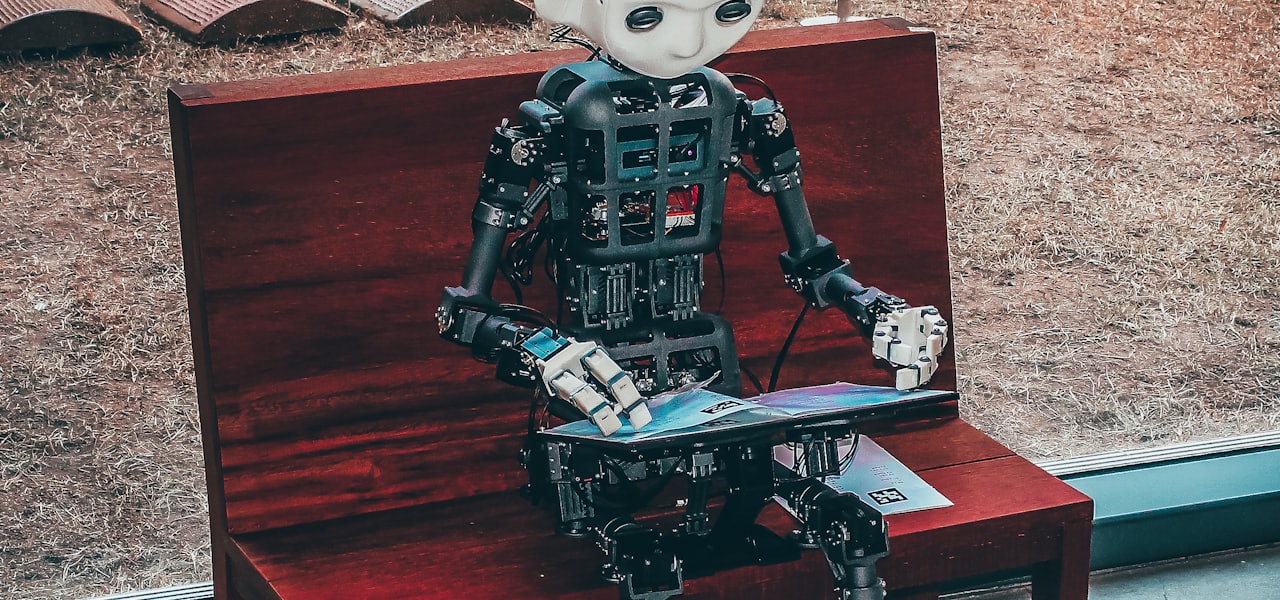
A manual override (MO) or manual analog override (MAO) is a mechanism where control is taken from an automated system and given to the user. For example, a manual override in photography refers to the ability for the human photographer to turn off the automatic aperture sizing, automatic focusing, or any other automated system on the camera. Some manual overrides can be used to veto an automated system's judgment when the system is in error. An example of this is a printer's ink level detection: in one case, a researcher found that when he overrode the system, up to 38% more pages could be printed at good quality by the printer than the automated system would have allowed. Automated systems are becoming increasingly common and integrated into everyday objects such as automobiles and domestic appliances. This development of ubiquitous computing raises general issues of policy and law about the need for manual overrides for matters of great importance such as life-threatening situations and major economic decisions. The loyalty of such autonomous devices then becomes an issue. If they follow rules installed by the manufacturer or required by law and refuse to cede control in some situations then the owners of the devices may feel disempowered, alienated and lacking true ownership. == Major incidents == China Airlines Flight 140 crashed, causing many deaths, due to a misunderstanding about the manual overrides for the autopilot. The Take-Off/Go Around system had been activated to abort a landing. It was programmed to ignore manual controls in this situation but the human pilots tried to continue the landing. The conflicting control signals from the pilots and autopilot then resulted in the aircraft stalling and crashing. The autopilot for this aircraft type was then reprogrammed so that it would never ignore a manual override.