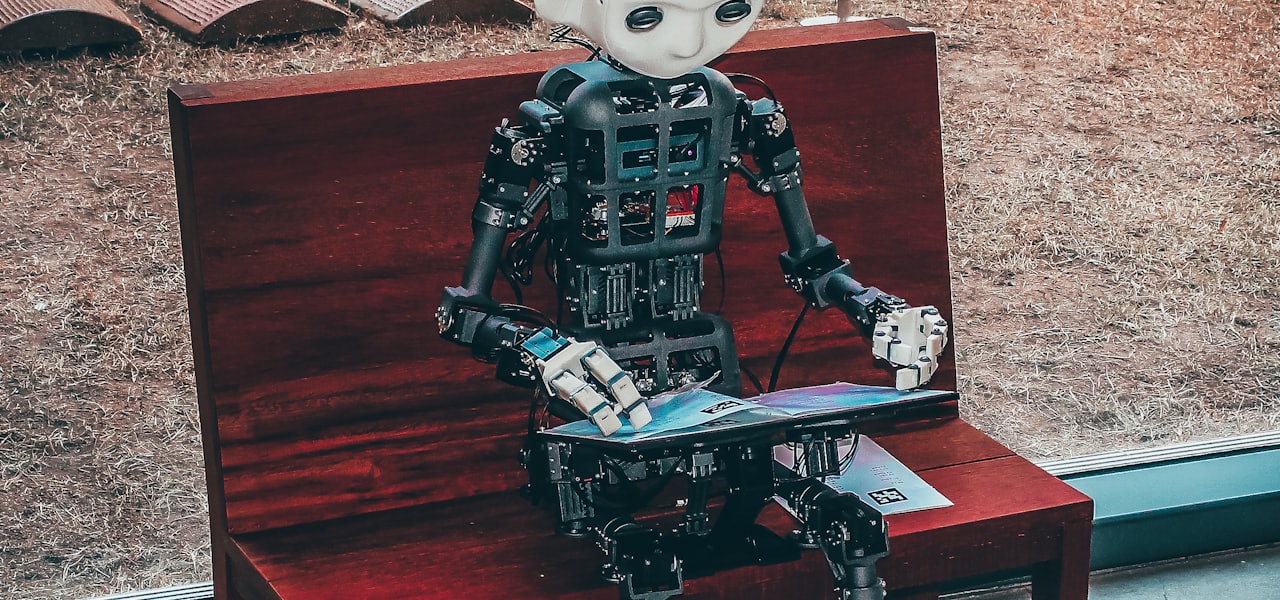
Trying to pick the best AI text-to-video tool? An AI text-to-video tool is software that uses machine learning to help you get more done — it scales effortlessly from a single task to thousands. The best picks balance beginner-friendly simplicity with the depth power users need, and they ship updates often. Whether you are a beginner or a pro, the right AI text-to-video tool slots into your workflow and pays for itself fast. This guide breaks down the top picks, their pros and cons, and who each one is best for.
Nuance Communications
Nuance Communications, Inc. was an American multinational computer software technology corporation, headquartered in Burlington, Massachusetts, that markets speech recognition and artificial intelligence software. Nuance merged with its competitor in the commercial large-scale speech application business, ScanSoft, in October 2005. ScanSoft was a Xerox spin-off that was bought in 1999 by Visioneer, a hardware and software scanner company, which adopted ScanSoft as the new merged company name. The original ScanSoft had its roots in Kurzweil Computer Products. In April 2021, Microsoft announced it would buy Nuance Communications. The deal is an all-cash transaction of $19.7 billion, including company debt, or $56 per share. The acquisition was completed in March 2022. == History == The Speech Technology and Research (STAR) Laboratory at SRI International began the journey that, in 1994, resulted in a spin-off company; Corona Corporation (later renamed to Nuance Communications ). Nuance Communications (NUAN) went public on the Nasdaq Stock Market in 1995. Nuance focused on commercializing advanced speech recognition technologies. Nuance was an early spinoff of SRI's Speech Technology and Research (STAR) Laboratory, a world leader in audio processing, speech and speaker analytics and spoken language research. The technology that served as the foundation of Nuance's speech recognition solution started at the STAR Lab and helped launch Nuance more than 20 years ago. In 1995, The SRI Language Modeling Toolkit (SRILM) was developed. This provides the tools to build and apply statistical language models (LMs), primarily for use in speech recognition, statistical tagging and segmentation, and machine translation. In terms of commercialization of natural automated speech recognition, SRI's natural language speech recognition software was the first to be deployed by a major corporation. In 1996, Charles Schwab & Co., Inc., used Nuance's speech recognition technology to allow customers to receive stock quotes over the telephone. One of the key features of the ‘Schwab Discount Brokerage system’, was the ability to recognize English words even when spoken by customers with accents. In 1997, Nuance Communications developed the first large scale commercial dialog system for United Parcel Services (UPS). UPS used the voice recognition platform to handle very large numbers of inquiries about package status. The company that would later merge with Nuance Communications started life as Visioneer, incorporated in 1992. In 1999, Visioneer acquired ScanSoft, Inc. (SSFT), and the combined company became known as ScanSoft. In September 2005, ScanSoft Inc. acquired and merged with Nuance Communications (NUAN), a natural language DOD-project spinoff from SRI International. The resulting company adopted the Nuance name. During the prior decade, the two companies competed in the commercial large-scale speech application business. === Data breach === Between 2014 and 2017, Nuance exposed over 45,000 patient records. == Solutions == Customer service virtual assistants Speech recognition — for people Speech recognition — for business Speech recognition — for physicians Accessibility Power PDF Managed Print Services Transcription === ScanSoft origins === In 1974, Raymond Kurzweil founded Kurzweil Computer Products, Inc. to develop the first omni-font optical character-recognition system – a computer program capable of recognizing text written in any normal font. In 1980, Kurzweil sold his company to Xerox. The company became known as Xerox Imaging Systems (XIS), and later ScanSoft. In March 1992, a new company called Visioneer, Inc. was founded to develop scanner hardware and software products, such as a sheetfed scanner called PaperMax and the document management software PaperPort. Visioneer eventually sold its hardware division to Primax Electronics, Ltd. in January 1999. Two months later, in March, Visioneer acquired ScanSoft from Xerox to form a new public company with ScanSoft as the new company-wide name. Prior to 2001, ScanSoft focused primarily on desktop imaging software such as TextBridge, PaperPort and OmniPage. Beginning with the December 2001 acquisition of Lernout & Hauspie assets, the company moved into the speech recognition business and began to compete with Nuance. Lernout & Hauspie had acquired speech recognition company Dragon Systems in June 2001, shortly before becoming bankrupt in October. Scansoft acquired speech recognition company SpeechWorks in 2003. === Partnership with Siri and Apple Inc. === In 2013, Nuance confirmed that its natural language processing algorithms supported Apple's Siri voice assistant. === Focus on health care === In 2019, Nuance spun off its automotive division as the company Cerence, allowing it to focus on health care applications. === Acquisition by Microsoft === On April 12, 2021, Microsoft announced that it would buy Nuance Communications for $19.7 billion, or $56 a share, a 22% increase over the previous closing price. Nuance's CEO, Mark Benjamin, stayed with the company. This was Microsoft's second-biggest acquisition up to that point, after its purchase of LinkedIn for $24 billion (~$30.7 billion in 2024) in 2016. Shortly after the deal, the Competition and Markets Authority, a UK regulatory body, stated it was looking into the deal on the basis of antitrust concerns. In December 2021, it was reported that the deal would be approved by the European Union. The acquisition was completed on March 4, 2022. In May 2023, Nuance announced an unspecified number of layoffs.
Film-out
Film-out is the process in the computer graphics, video production and filmmaking disciplines of transferring images or animation from videotape or digital files to a traditional film print. Film-out is a broad term that encompasses the conversion of frame rates, color correction, as well as the actual printing, also called scannior recording. The film-out process is different depending on the regional standard of the master videotape in question – NTSC, PAL, or SECAM – or likewise on the several emerging region-independent formats of high definition video (HD video); thus each type is covered separately, taking into account regional film-out industries, methods and technical considerations. == Live action video == Many modern documentaries and low-budget films are shot on videotape or other digital video media, instead of film stock, and completed as digital video. Video production means substantially lower costs than 16 mm or 35 mm film production on all levels. Until recently, the relatively low cost of video ended when the issue of a theatrical presentation was raised, which required a print for film projection. With the growing presence of digital projection, this is becoming less of a factor. === Standard definition (SD) video === Film-out of standard-definition video – or any source that has an incompatible frame rate – is the up-conversion of video media to film for theatrical viewing. The video-to-film conversion process consists of two major steps: first, the conversion of video into digital film frames which are then stored on a computer or on HD videotape; and secondly, the printing of these digital film frames onto actual film. To understand these two steps, it is important to understand how video and film differ. Film (sound film, at least) has remained unchanged for almost a century and creates the illusion of moving images through the rapid projection of still images, frames, upon a screen, typically 24 per second. Traditional interlaced SD video has no real frame rate, (though the term frame is applied to video, it has a different meaning). Instead, video consists of a very fast succession of horizontal lines that continually cascade down the television screen – streaming top to bottom, before jumping back to the top and then streaming down to the bottom again, repeatedly, almost 60 alternating screen-fulls every second for NTSC, or exactly 50 such screen-fulls per second for PAL and SECAM. Since visual movement in video is infused in this continuous cascade of scan lines, there is no discrete image or real frame that can be identified at any one time. Therefore, when transferring video to film, it is necessary to invent individual film frames, 24 for every second of elapsed time. The bulk of the work done by a film-out company is this first step, creating film frames out of the stream of interlaced video. Each company employs its own (often proprietary) technology for turning interlaced video into high-resolution digital video files of 24 discrete images every second, called 24 progressive video or 24p. The technology must filter out all the visually unappealing artifacting that results from the inherent mismatch between video and film movement. Moreover, the conversion process usually requires human intervention at every edit point of a video program, so that each type of scene can be calibrated for maximum visual quality. The use of archival footage in video especially calls for extra attention. Step two, the scanning to film, is the rote part of the process. This is the mechanical step where lasers print each of the newly created frames of the 24p video, stored on computer files or HD videotape, onto rolls of film. Most companies that do film-out, do all the stages of the process themselves for a lump sum. The job includes converting interlaced video into 24p and often a color correction session – (calibrating the image for theatrical projection), before scanning to physical film, (possibly followed by color correction of the film print made from the digital intermediary) – is offered. At the very least, film-out can be understood as the process of converting interlaced video to 24p and then scanning it to film. ==== NTSC video ==== NTSC is the most challenging of the formats when it comes to standards conversion and, specifically, converting to film prints. NTSC runs at the approximate rate of 29.97 video frames (consisting of two interlaced screen-fulls of scan lines, called fields, per frame) per second. In this way, NTSC resolves actual live action movement at almost – but not quite – 60 alternating half-resolution images every second. Because of this 29.97 rate, no direct correlation to film frames at 24 frames per second can be achieved. NTSC is hardest to reconcile with film, thus motivating its own unique processes. ==== PAL and SECAM video ==== PAL and SECAM run at 25 interlaced video frames per second, which can be slowed down or frame-dropped, then deinterlaced, to correlate frame for frame with film running at 24 actual frames per second. PAL and SECAM are less complex and demanding than NTSC for film-out. PAL and SECAM conversions do agitate, though, with the unpleasant choice between slowing down video (and audio pitch, noticeably) by four percent, from 25 to 24 frames per second, in order to maintain a 1:1 frame match, slightly changing the rhythm and feel of the program; or maintaining original speed by periodically dropping frames, thereby creating jerkiness and possible loss of vital detail in fast-moving action or precise edits. === High definition (HD) digital video === High definition digital video can be shot at a variety of frame rates, including 29.97 interlaced (like NTSC) or progressive; or 25 interlaced (like PAL) or progressive; or even 24-progressive (just like film). HD, if shot in 24-progressive, scans nearly perfectly to film without the need for a frame or field conversion process. Other issues remain though, based on the different resolutions, color spaces, and compression schemes that exist in the high-definition video world. == Computer graphics and animation == Artists working with CGI-Computer-generated imagery animation computers create pictures frame by frame. Once the finished product is done, the frames are outputted, normally in a DPX file. These picture data files can then be put on to film using a film recorder for film out. SGI computers started the high-end CGI-Computer-generated imagery animation systems, but with faster computers and the growth of Linux-based systems, many others are on the market now. Movies fully rendered and animated in CGI such as Toy Story, and Antz utilize the film-out method to produce 35mm copies for archival and release prints. Most CGI work is done in 2K Display resolution files (about the size of QXGA) and then output to the Film-out device for creation of 35 mm elements. With 4K Display resolution digital intermediates on the rise, newer types of film-out recorders are being developed to accept 4k resolution files. A 2K movie requires a Storage Area Network storage several terabytes in size to be properly stored and played out. Computer graphics files are handled the same way but in single frames and may use DPX, TIFF or other file formats. == Digital intermediates == Film-out-recording is the last step of digital intermediate workflow. DPX files that were scanned on a motion picture film scanner are stored on a storage area network (often abbreviated as SAN). The scanned DPX footage is edited and composited-FX on workstations, then mastered back on film. Film restoration is also done this way. A "film intermediate" is an analog variation of a digital intermediate, where a project shot on digital video is printed onto film stock and transferred back to digital video to emulate film. The term was coined after it was used on the Oscar-winning 2012 short film "Curfew". The process was also used on the films Dune (2021) and The Batman (2022). == Images for graphic design and print industries == The days of newspapers and magazines shooting 35mm film are almost gone. Digital cameras can now shoot all the images needed, storing them as files (e.g. JPEG, DPX or another format) that are readily edited prior to use. Once the final copy is approved, it can be filmed out for publishing. Digital stills are not the only way to get pictures used in the graphic design and print industries. Film scanners and computer graphics programs are also common sources for graphic design and print industries. == Types of devices == The following devices are used in film-out processes: CRT recorder. Camera and a special TV display Kinescope – early type Electronic Video Recording or EVR – early type EBR Electron Beam Film Recorder 16 mm by 3M Laser film recorder, like Kodak's high-end Lightning II recorder and Arri's Arrilaser. DLP Film recorder, like Cinevation's real-time Cinevator. == History == Lately it has become possible to transfer video images, inclu
Sketchpad
Sketchpad (a.k.a. Robot Draftsman) is a computer program written by Ivan Sutherland in 1963 in the course of his PhD thesis, for which he received the Turing Award in 1988, and the Kyoto Prize in 2012. It pioneered human–computer interaction (HCI), and is considered the ancestor of modern computer-aided design (CAD) programs and as a major breakthrough in the development of computer graphics in general. For example, Sketchpad inspired the graphical user interface (GUI) and object-oriented programming. Using the program, Sutherland showed that computer graphics could be used for both artistic and technical purposes and for demonstrating a novel method of human–computer interaction. == History == See History of the graphical user interface for a more detailed discussion of GUI development. == Software == Sketchpad was the earliest program ever to use a complete graphical user interface. The clever way the program organizes its geometric data pioneered the use of master (objects) and occurrences (instances) in computing and pointed forward to object-oriented programming. The main idea was to have master drawings which can be instantiated into many duplicates. When a master drawing is changed, then all instances change also. This was the first known form of an entity component system: for example instead of encapsulating points inside of a line object, the points are stored in a ring buffer as described in pages 48 to 52 of the paper, and the line only points to them. This allowed moving one point to alter all the shapes that use it in a single operation. The structures in Sketchpad were also able to store pointers to functions, to achieve a different behavior depending on the kind of object. In figure 3.8 of the paper, the "instances generic block" stores several "subroutine entries" which are pointers to functions: "display", "howbig" etc. This was an early form of virtual functions. Geometric constraints was another major invention in Sketchpad, letting a user easily constrain geometric properties in the drawing: for instance, the length of a line or the angle between two lines could be fixed. As a trade magazine said, clearly Sutherland "broke new ground in 3D computer modeling and visual simulation, the basis for computer graphics and CAD/CAM". Very few programs can be called precedents for his achievements. Patrick J. Hanratty is sometimes called the "father of CAD/CAM" and wrote PRONTO, a numerical control language at General Electric in 1957, and wrote CAD software while working for General Motors beginning in 1961. Sutherland wrote in his thesis that Bolt, Beranek and Newman had a "similar program" and T-Square was developed by Peter Samson and one or more fellow MIT students in 1962, both for the PDP-1. The Computer History Museum holds program listings for Sketchpad. == Hardware == Sketchpad ran on the MIT Lincoln Laboratory TX-2 (1958) computer at the Massachusetts Institute of Technology (MIT), which had 64k of 36-bit words. The user drew on the computer monitor screen with the recently invented light pen, which relayed information on its position by computing at what time the light from the scanning cathode-ray tube screen is detected. To configure the initial position of the light pen, the word INK was displayed on the screen, which, upon tapping, initialised the program with a white cross to continue keeping track of the pen's movement relative to its prior position. Of the 36 bits available to store each display spot in the display file, 20 gave the coordinates of that spot for the display system and the remaining 16 gave the address of the n-component element responsible for adding that spot to display. The TX-2 was an experimental machine and the hardware changed often (on Wednesdays, according to Sutherland). By 1975, the light pen and the cathode-ray tube with which it had been used had been removed. == Publications == The Sketchpad program was part and parcel of Sutherland's Ph.D. thesis at MIT and peripherally related to the Computer-Aided Design project at that time. Sketchpad: A Man-Machine Graphical Communication System.
Groover
Groover is an online platform, record label and distributor, connecting artists and musicians with music professionals and media outlets. The service was founded in 2018 in France and operates from offices in Paris and New York. The platform has over 3,000 active contacts, including SPIN Magazine and Sofar Sounds. Groover uses a micro-payment model. Among the platform's over 500,000 regular users are record labels such as Ninja Tune, Ba Da Bing Records, Dance To The Radio, Roche Musique, Wagram Music, Secret City Records, and artists including Bonobo, Michael Bolton, Aloe Blacc, Haddaway, Passenger, La Femme and Chinese Man. == History == Groover was launched at the MaMA Music Convention in October 2018. It was co-founded by Dorian Perron, Romain Palmieri, and Rafaël Cohen while they were students at UC Berkeley. Initially growing in France, the company has expanded to the United States, Canada, the United Kingdom, Brazil, Italy, and elsewhere in Europe. In March 2019, Groover was part of the Business France delegation at the South by Southwest (SXSW) festival. In June 2019, Groover raised €1.3 million from various angel investors. In April 2021, Groover acquired the platform Soonvibes, which had 70,000 users at the time, in order to strengthen its community in the electronic music space. In November 2021, Groover announced a €6 million funding round from Bpifrance Creative Industries and Partech. Between 2023 and 2025, Groover entered strategic partnerships with major artist service providers, including CD Baby, TuneCore, SoundCloud, UnitedMasters, Symphonic Distribution, Audiomack and SACEM. In February 2024, Groover announced a Series A funding round of $8 million from OneRagTime, Trind, Techmind, and Mozza Angels. == Function == Using a micro-payment system, professionals listen to tracks and provide written feedback. These professionals retain full editorial independence and are under no obligation to share the track or contact the artist. == Awards == 2nd Prize for Music Innovation 2023 from the Centre national de la musique (France) "Future Creator" Award at the Petit Poucet Competition 2019 Jury's Special Mention at the MaMA Invent 2019 competition 1st Prize for Digital Initiative in Culture, Communication & Media 2019 awarded by Audiens "Start-up of the Year" at the Social Music Awards 2020 French American Entrepreneurship Award 2022 at the French Consulate in New York
Double descent
Double descent in statistics and machine learning is the phenomenon where a model's error rate on the test set initially decreases with the number of parameters, then peaks, then decreases again. This phenomenon has been considered surprising, as it contradicts assumptions about overfitting in classical machine learning. The increase usually occurs near the interpolation threshold, where the number of parameters is the same as the number of training data points (the model is just large enough to fit the training data). Or, more precisely, it is the maximum number of samples on which the model/training procedure achieves approximately on average 0 training error. == History == Early observations of what would later be called double descent in specific models date back to 1989. The term "double descent" was coined by Belkin et. al. in 2019, when the phenomenon gained popularity as a broader concept exhibited by many models. The latter development was prompted by a perceived contradiction between the conventional wisdom that too many parameters in the model result in a significant overfitting error (an extrapolation of the bias–variance tradeoff), and the empirical observations in the 2010s that some modern machine learning techniques tend to perform better with larger models. == Theoretical models == Double descent occurs in linear regression with isotropic Gaussian covariates and isotropic Gaussian noise. A model of double descent at the thermodynamic limit has been analyzed using the replica trick, and the result has been confirmed numerically. A number of works have suggested that double descent can be explained using the concept of effective dimension: While a network may have a large number of parameters, in practice only a subset of those parameters are relevant for generalization performance, as measured by the local Hessian curvature. This explanation is formalized through PAC-Bayes compression-based generalization bounds, which show that less complex models are expected to generalize better under a Solomonoff prior.
Groover
Groover is an online platform, record label and distributor, connecting artists and musicians with music professionals and media outlets. The service was founded in 2018 in France and operates from offices in Paris and New York. The platform has over 3,000 active contacts, including SPIN Magazine and Sofar Sounds. Groover uses a micro-payment model. Among the platform's over 500,000 regular users are record labels such as Ninja Tune, Ba Da Bing Records, Dance To The Radio, Roche Musique, Wagram Music, Secret City Records, and artists including Bonobo, Michael Bolton, Aloe Blacc, Haddaway, Passenger, La Femme and Chinese Man. == History == Groover was launched at the MaMA Music Convention in October 2018. It was co-founded by Dorian Perron, Romain Palmieri, and Rafaël Cohen while they were students at UC Berkeley. Initially growing in France, the company has expanded to the United States, Canada, the United Kingdom, Brazil, Italy, and elsewhere in Europe. In March 2019, Groover was part of the Business France delegation at the South by Southwest (SXSW) festival. In June 2019, Groover raised €1.3 million from various angel investors. In April 2021, Groover acquired the platform Soonvibes, which had 70,000 users at the time, in order to strengthen its community in the electronic music space. In November 2021, Groover announced a €6 million funding round from Bpifrance Creative Industries and Partech. Between 2023 and 2025, Groover entered strategic partnerships with major artist service providers, including CD Baby, TuneCore, SoundCloud, UnitedMasters, Symphonic Distribution, Audiomack and SACEM. In February 2024, Groover announced a Series A funding round of $8 million from OneRagTime, Trind, Techmind, and Mozza Angels. == Function == Using a micro-payment system, professionals listen to tracks and provide written feedback. These professionals retain full editorial independence and are under no obligation to share the track or contact the artist. == Awards == 2nd Prize for Music Innovation 2023 from the Centre national de la musique (France) "Future Creator" Award at the Petit Poucet Competition 2019 Jury's Special Mention at the MaMA Invent 2019 competition 1st Prize for Digital Initiative in Culture, Communication & Media 2019 awarded by Audiens "Start-up of the Year" at the Social Music Awards 2020 French American Entrepreneurship Award 2022 at the French Consulate in New York